Abstract: This paper deeply explores the wide application of hyperspectral imaging technology in the field of geological exploration. It elaborates on its important role in mineral exploration, geological disaster monitoring, etc., analyzes the advantages and challenges of this technology, and looks forward to its future development prospects.
I. Introduction
Geological exploration is crucial for resource development and environmental protection. With the continuous advancement of science and technology, hyperspectral imaging technology has brought new opportunities to the field of geological exploration with its unique advantages. Hyperspectral images can provide rich spectral information and provide a powerful means for identifying different minerals and geological features.
II. Overview of hyperspectral imaging technology
(I) Principle
Hyperspectral images are composed of a series of continuous narrow-band images. By measuring the reflection, radiation and other characteristics of the target object at different wavelengths, the spectral characteristic curve of the target is obtained. These spectral characteristic curves reflect the physical, chemical and other characteristics of the target and can be used for target identification and classification.
(II) Features
High spectral resolution: It can distinguish tiny spectral differences and make fine distinctions between different minerals and geological structures.
Multi-band information: It contains a large number of bands and can fully obtain the spectral information of the target.
Combining spatial information with spectral information: not only can the location of the target be determined, but also its geological characteristics can be deeply understood.
Non-contact measurement: monitoring can be carried out without destroying the geological environment.
III. Application of hyperspectral images in geological exploration
(I) Mineral exploration
Mineral identification: Different minerals have unique spectral characteristics, and hyperspectral imaging technology can quickly and accurately identify various minerals. For example, by analyzing the reflectivity of a specific band, different types of mineral resources such as iron ore and copper ore can be distinguished.
Mineral distribution mapping: Hyperspectral images can be used to draw distribution maps of mineral resources, providing an important reference for mineral exploration and development.
Mineral reserve assessment: Combining geological models and hyperspectral data, mineral reserves can be assessed to provide a scientific basis for resource planning and decision-making.
(II) Geological disaster monitoring
Landslide monitoring: Before a landslide, the spectral characteristics of the surface will change. Hyperspectral imaging technology can monitor the spectral changes of the mountain in real time and warn of the occurrence of landslides in advance.
Debris flow monitoring: When a debris flow occurs, it will carry a large amount of mud and rocks, and its spectral characteristics are very different from the normal surface. Hyperspectral images can quickly identify the area and scale of debris flow, and provide support for disaster relief.
Ground subsidence monitoring: Ground subsidence will cause the spectral characteristics of the surface to change. Hyperspectral imaging technology can monitor the scope and degree of ground subsidence, and provide reference for urban planning and infrastructure construction.
IV. Advantages and challenges of the application of hyperspectral imaging technology in geological exploration
(I) Advantages
High-precision identification: It can provide detailed spectral information and achieve high-precision identification of minerals and geological features.
Large-area monitoring: It can quickly obtain geological information over a large area and improve the efficiency of geological exploration.
Real-time monitoring: It has the ability of real-time monitoring and can detect the occurrence of geological disasters in a timely manner.
(II) Challenges
Complex data processing: Hyperspectral images have a large amount of data and are difficult to process, requiring professional software and algorithms.
Environmental interference: In the field environment, it is easily affected by factors such as weather and light, which reduces the accuracy of the data.
High equipment cost: Hyperspectral imaging equipment is expensive, which limits its wide application in the field of geological exploration.
V. Future development prospects
Technology continues to advance: With the continuous development of sensor technology, data processing algorithms, etc., hyperspectral imaging technology will become more mature and perfect, and its performance will continue to improve.
Cost reduction: With the popularization of technology and the intensification of market competition, the price of hyperspectral imaging equipment is expected to gradually decrease, making it more widely used in the field of geological exploration.
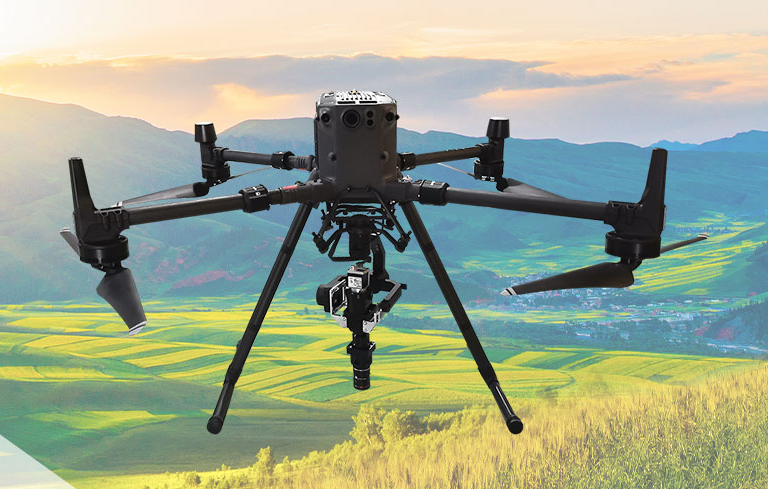
Multi-technology integration: Combine hyperspectral imaging technology with other advanced technologies, such as drone technology and satellite remote sensing technology, to achieve more efficient geological exploration.
Application field expansion: In addition to mineral exploration and geological disaster monitoring, hyperspectral imaging technology will also play an important role in geological environment evaluation, groundwater resource exploration and other fields.
VI. Conclusion
Hyperspectral imaging technology has broad application prospects in the field of geological exploration. It provides new means and methods for mineral exploration and geological disaster monitoring. Although there are still some challenges, with the continuous advancement of technology and the reduction of costs, hyperspectral imaging technology will play an increasingly important role in geological exploration and make greater contributions to resource development and environmental protection.