Abstract: This paper deeply explores the wide application of hyperspectral imaging technology in the field of agriculture. It elaborates on its important role in crop monitoring, soil analysis, and agricultural product quality testing, analyzes the advantages and challenges of this technology, and looks forward to its future development prospects.
I. Introduction
Agriculture, as a basic industry of the national economy, is crucial to ensuring food security and promoting economic development. With the continuous advancement of science and technology, hyperspectral imaging technology has brought new development opportunities to the agricultural field with its unique advantages. Hyperspectral images can provide rich spectral information and spatial information, providing strong technical support for the realization of precision agriculture.
II. Overview of hyperspectral imaging technology
(I) Principle
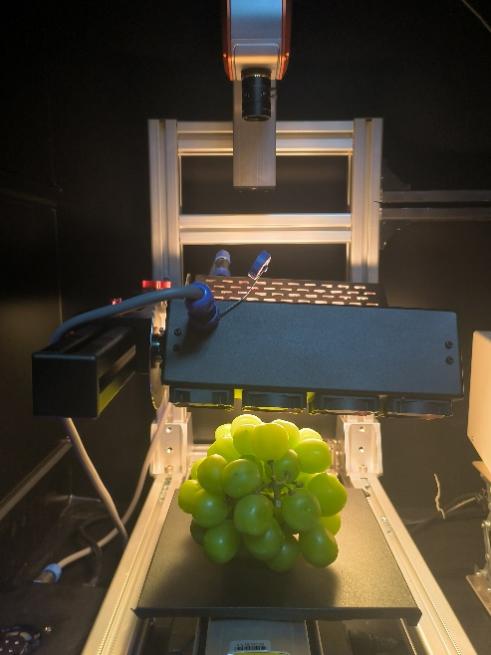
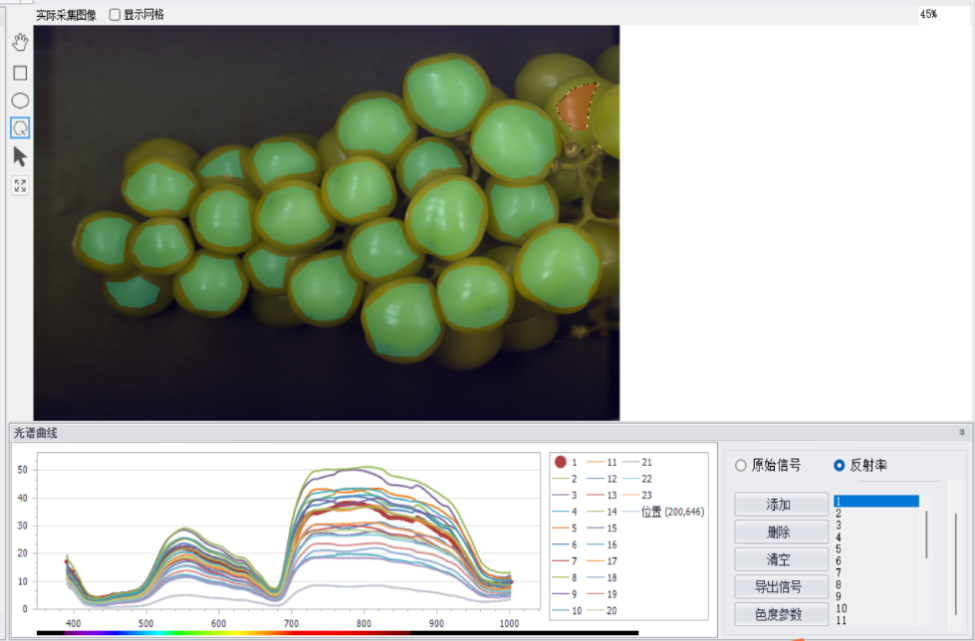
Hyperspectral images are composed of a series of continuous narrow-band images. By measuring the reflection, radiation and other characteristics of the target object at different wavelengths, the spectral characteristic curve of the target is obtained. These spectral characteristic curves reflect the physical, chemical and other characteristics of the target and can be used for target identification and classification.
(II) Features
High spectral resolution: It can distinguish tiny spectral differences and make fine distinctions between crops and soil components in different growth states.
Multi-band information: It contains a large number of bands and can fully obtain the spectral information of the target.
Combining spatial information with spectral information: not only can the location of the target be determined, but also its intrinsic characteristics can be deeply understood.
Non-contact measurement: monitoring can be performed without affecting crop growth.
III. Application of hyperspectral images in agriculture
(I) Crop monitoring
Growth status monitoring: By analyzing the spectral characteristics of crops, crop growth can be monitored in real time, such as leaf area index, biomass, etc. For example, at different growth stages, the spectral curve of crops will change, and these changes can be used to judge the health status and growth progress of crops.
Pest and disease detection: Pests and diseases can cause changes in the spectral characteristics of crops. Hyperspectral imaging technology can quickly and accurately detect the occurrence area and severity of pests and diseases. Take preventive measures in time to reduce losses.
Water stress monitoring: Water shortage will affect the physiological state of crops, thereby changing their spectral characteristics. Hyperspectral images can be used to monitor the moisture status of crops and provide a basis for reasonable irrigation.
(II) Soil analysis
Component detection: The content of organic matter, nitrogen, phosphorus, potassium and other nutrients in the soil can be analyzed to provide data support for soil fertility assessment and precision fertilization.
Texture analysis: The spectral characteristics can be used to determine the texture type of soil, such as sandy soil, loam, clay, etc., providing a reference for soil improvement in agricultural production.
Pollution detection: It can detect pollutants such as heavy metals and pesticide residues in the soil, providing technical means for soil environmental protection.
(III) Agricultural product quality detection
Maturity judgment: Agricultural products of different maturity have different spectral characteristics. Hyperspectral imaging technology can accurately judge the maturity of agricultural products and provide a basis for timely picking.
Quality grading: The quality of agricultural products can be graded, such as the sweetness, acidity, hardness and other indicators of fruits, to increase the added value of agricultural products.
Authenticity identification: For some precious agricultural products, such as Chinese medicinal materials, hyperspectral imaging technology can be used for authenticity identification to protect the rights and interests of consumers.
IV. Advantages and challenges of the application of hyperspectral imaging technology in the agricultural field
(I) Advantages
High accuracy: It can provide rich information and realize accurate monitoring and analysis of agricultural goals.
High efficiency: It can quickly obtain agricultural information over a large area and improve the efficiency of agricultural production management.
Nondestructive testing: non-contact measurement method, which will not cause damage to crops and soil.
(II) Challenges
Complex data processing: Hyperspectral images have a large amount of data and are difficult to process, requiring professional software and algorithms.
High cost: Hyperspectral imaging equipment is expensive, which limits its wide application in the agricultural field.
Environmental adaptability issues: Under different environmental conditions such as lighting and climate, the quality of hyperspectral images may be affected.
V. Future development prospects
Continuous technological progress: With the continuous development of sensor technology, data processing algorithms, etc., hyperspectral imaging technology will become more mature and perfect, and its performance will continue to improve.
Cost reduction: With the popularization of technology and the intensification of market competition, the price of hyperspectral imaging equipment is expected to gradually decrease, making it more widely used in the agricultural field.
Multi-technology integration: Combine hyperspectral imaging technology with other advanced technologies, such as drone technology and Internet of Things technology, to achieve more intelligent agricultural production management.
Application field expansion: In addition to the current application fields, hyperspectral imaging technology will also play an important role in agricultural insurance, agricultural resource assessment and other fields.
VI. Conclusion
Hyperspectral imaging technology has broad application prospects in the agricultural field. It provides accurate and efficient means for crop monitoring, soil analysis and agricultural product quality testing. Although there are still some challenges, with the continuous advancement of technology and the reduction of costs, hyperspectral imaging technology will play an increasingly important role in the agricultural field and make greater contributions to promoting agricultural modernization.